Transatlantic Slave Trade 1500-1866


Of the 12.5 million Africans shipped to the New World during the Transatlantic Slave Trade, fewer than 388,000 arrived in the United States.

In the late 15th century, the advancement of seafaring technologies created a new Atlantic that would change the world forever. As ships began connecting West Africa with Europe and the Americas, new fortunes were sought and native populations were decimated. With the native labor force dwindling and demand for plantation and mining labor growing, the transatlantic slave trade began.

The Transatlantic Slave Trade was underway from 1500-1866, shipping more than 12 million African slaves across the world. Of those slaves, only 10.7 million survived the dreaded Middle Passage. Over 400 years, the majority of slaves (4.9 million) found their way to Brazil where they suffered incredibly high mortality rates due to terrible working conditions. Brazil was also the last country to ban slavery in 1888.

By the time the United States became involved in the slave trade, it had been underway for two hundred years. The majority of its 388,000 slaves arrived between 1700 and 1866, representing a much smaller percentage than most Americans realize.

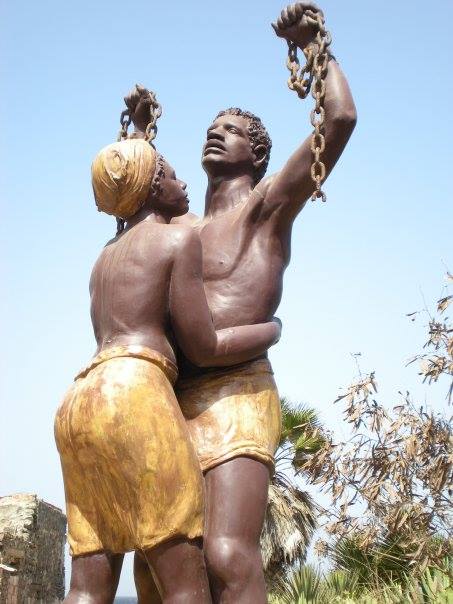
Image: African Renaissance Monument, Senegal
From pbs.org

Sacrificial Daughter | #WIP

Sacrificial Daughter

NaNoWriMo lives! This unedited excerpt is from my 2017 project, Sacrificial Daughter, currently in revisions.


Thirty minutes passed before Ana Sellers returned Jeff Russell’s call. Expecting a receptionist or machine, she was surprised when Jeff answered the phone.

“Russell and Peters, may I help you?”

“I’m returning a call to Jeff Russell.”

“Analeigh?”

Pulling the phone away from her ear, Ana stared at it, incredulous. He knew her? Sixteen years had passed since the day she left Corwin without looking back.

“You know me?”

You were a year ahead of me in school.”

The name still didn’t ring any bells so she would have to take his word for it.

“I see. And now you’re an attorney in Corwin.?”

“Yes, my cousin, Adam, and I took over the practice from our dads about seven years ago.”

“And… and why d-do you need to speak to me, Jeff? What is the urgency?”

Silence was his response.

“Jeff? Still there?”

“Yes, I’m here. I’ve been looking for you for over two weeks.”

“Please tell me what this is about and why you’ve been looking for me.”

She heard an exhale escape from him, gruff and harsh.

“Analeigh, Rosie Chastain passed away.”

Ana froze. Rosie? Gone? No. No way. She spoke to her dear friend… three weeks ago. Damn it. Rosie said she was coming down with a cold but was looking forward to flying to Georgia in July to see her good friend and surrogate daughter.

Ana pulled at her chest, trying to ease the pain gnawing at her heart.

“W-What happened?”

“Heart failure. She told everyone she had a cold, but it was pneumonia. Her heart wasn’t strong enough to handle it. Rosie had a heart attack and slipped into a coma. Three days later, she coded. There was nothing the doctors could do.”

Her dear friend was gone. Ana’s skin prickled with anxiety as she fought to keep grief from overwhelming her.

“Jeff, how did you find me? What made you even look for me?”

“Like I said, it took some time, Analeigh. Rosie didn’t get out much the last few years. The few people she did talk to said she was disgusted with the changes and direction of Corwin.”

Ana knew that was true.

She tried to avoid the subject of Corwin when she and Rosie talked. Ana didn’t need memories of the place flashing through her mind, and Rosie said it decayed into nothing more than a political cesspool. The town’s first families — the Burfords, Foleys, and Lakes held all the offices of power. They treated Corwin like it was their personal kingdom and speaking out against them killed social standing and sometimes worse.

“Rosie had no family, and at the beginning, we thought she had no will. After wading through the legalities, we were able to enter her home. We found her will, drawn up by an attorney over in Spradlin. We also found your name and number, but the number was disconnected.”

Damn it! After a mini-battle with her cell provider over dropped calls and shoddy service, Ana switched carriers… and got a new number… four days after she and Rosie last spoke.

Analeigh didn’t bother to wipe away her tears when she realized by the time she activated her new number… Rosie was already gone.

“Analeigh?”

“I’m here, Jeff. Just trying to take all this in.”

“I’m sorry to have to tell you like this, Analeigh.”

“It’s alright. I do appreciate the call, Jeff… and thank you.”

“Wait, Analeigh. I didn’t hunt you done just to tell you Rosie was gone. In her will, she left everything to you. Her home and the store.”

The buzzing in Ana’s ears roared over Jeff’s voice. Analeigh Sellers sat there overwhelmed and in shock with a sense of dread taking over.


Image from ThinkStock
©2017 Felicia Denise, All Rights Reserved

Earliest Recorded Protest Against Slavery


Quaker Protest


The earliest recorded protest against slavery was by the Quakers in 1688.

Quakers, also known as “The Society of Friends,” have a long history of abolition. But it was four Pennsylvania Friends from Germantown who wrote the initial protest in the 17th century. They saw the slave trade as a grave injustice against their fellow man and used the Golden Rule to argue against such inhumane treatment; regardless of skin color, “we should do unto others as we would have done onto ourselves.” In their protest they stated, “Pray, what thing in the world can be done worse towards us, then if men should robb or steal us away, & sell us for slaves to strange Countries, separating husbands from their wife and children….”

Their protest against slavery and human trafficking was presented at a “Monthly Meeting at Dublin” in Philadelphia. The Dublin Monthly Meeting reviewed the protest but sent it to the Quarterly Meeting, feeling it to be too serious an issue for their own meeting to decide. The four Friends continued their efforts and presented at the Philadelphia Yearly Meeting, but it wasn’t until 88 years later that the Society of Friends officially denounced slavery.

Over the centuries, this rare document has been considered lost twice. Most recently it was rediscovered in 2005 and is now at Haverford College Special Collections.

Photo: 1688 Germantown Quaker Petition Against Slavery

Meeting the Family #WIP


Dinner Table

Olivia’s dinner with Bruce and his adult children continues in Family Matters.


Olivia was still smiling at the empty doorway when Bruce walked up behind her and pulled her back against him.

“And you were worried they wouldn’t like you. I think they like you more than me.”

She turned and pulled him into a deep kiss.

Bruce leaned into the kiss, allowing her to lead.

Olivia paused and whispered against his lips.

“Don’t worry, Bellamy. I’ll always like you best.”

Cupping her face in his hands, Bruce continued the kiss.

Leaning his forehead against hers, Bruce sighed.

“We’d better stop before I embarrass us in front of my kids.”

Olivia placed a quick kiss on his lips and backed away with a smirk.

“Can’t have your kids thinking I want you just for your body.”

Bruce considered her remark as Olivia backed away. He loved playful, flirty Olivia. She let her walls down and there was no sadness in her beautiful eyes. She looked at him like he mattered… like he was important to her. Bruce knew their relationship became serious faster than most, but since the day they met, Bruce knew Olivia was the one.

Bruce unbuttoned his jacket.

“Let me take your coat so I can put you to work setting the table. We’ll investigate your obsession with my body later.”

Olivia smirked as she unbuttoned her pea coat. Remembering the black tee underneath, she pulled the coat tighter around her.

“Bellamy… this shirt. Maybe it’s not such-…”

The rest of Olivia’s comment died in her throat as she watched Bruce remove his jacket. He struck a pose, and Olivia got the giggles all over again.

“It’ll be alright, sweetness.”

Olivia ripped off her pea coat and they stood there laughing at each other.

Hearing the laughter and not one to miss out on fun, Shaun Bellamy stuck his head out the kitchen door.

“What’s so funny-…”

Before he could finish, his father pulled Olivia to his side. They continued to laugh like teenagers.

Seeing their shirts, Shaun chuckled, shaking his head.

“I wondered what was up with your shirt, dad. I thought you were re-living the election. Now it makes sense.”

“Just emphasizing the point, son.”

Bruce gestured to his shirt which said, “I’m with HER!” as he slipped an arm around Olivia and grinned at her tee which read, “I’m with HIM!”

Shaun backed into the kitchen, and Bruce and Olivia could hear him say, “Guys, those two are going to be trouble!”

Bruce kissed Olivia’s forehead before hanging their coats in the hall closet.

Olivia chided herself for dreading this dinner. Bruce’s children were warm and genuine. Being in Bruce’s home didn’t feel odd. It was comfortable and inviting.

It felt like home.

Olivia wasn’t sure if that was a good thing.

©2017 Felicia Denise, All Rights Reserved
Black Cowboys in the Old West


One in four cowboys was Black, despite the stories told in popular books and movies.

In fact, it’s believed that the real “Lone Ranger” was inspired by an African-American man named Bass Reeves. Reeves had been born a slave but escaped West during the Civil War where he lived in what was then known as Indian Territory. He eventually became a Deputy U.S. Marshal, was a master of disguise, an expert marksman, had a Native-American companion, and rode a silver horse. His story was not unique however.

In the 19th century, the Wild West drew enslaved Blacks with the hope of freedom and wages. When the Civil War ended, freedmen came West with the hope of a better life where the demand for skilled labor was high. These African-Americans made up at least a quarter of the legendary cowboys who lived dangerous lives facing weather, rattlesnakes, and outlaws while they slept under the stars driving cattle herds to market.

While there was little formal segregation in frontier towns and a great deal of personal freedom, Black cowboys were often expected to do more of the work and the roughest jobs compared to their white counterparts. Loyalty did develop between the cowboys on a drive, but the Black cowboys were typically responsible for breaking the horses and being the first ones to cross flooded streams during cattle drives. In fact, it is believed that the term “cowboy” originated as a derogatory term used to describe Black “cowhands.”

Image: Bass Reeves, The first African-American US Deputy Marshal

From pbs.org

It’s time for a Drabble!


Drabbles


Back with another Drabble!

I believe I’m getting the hang of the rhythm.

The difficult part–word usage–is… coming.

Much like any story, writers want readers to be able to empathize with the protagonist (good or bad), and visualize and feel the scene.

Tall order for a hundred words but it is fun!

How did I do?

~~~

C H A N G E S – Drabble #2

Kerri Kennedy sat alone on the swing watching her four former friends play across the schoolyard.

They treated Kerri as though she’d changed.

The accident last winter took her father and left Kerri with mangled legs.

She couldn’t stand up straight and walked with a limp, but she was still the girl who liked pineapple on her pizza.

She wasn’t the one who changed.

A soccer ball bounced against Kerri’s foot. She kicked it back to the girl running toward her.

“Thanks. Wanna play with us?”

“I can’t. My leg.”

“Sure, you can.”

Surprised, Kerri smiled at her new friend.


©2018 Felicia Denise, All Rights Reserved

The Real Betty Boop


Baby Esther


The iconic cartoon character Betty Boop was inspired by a Black jazz singer in Harlem. Introduced by cartoonist Max Fleischer in 1930, the caricature of the jazz age flapper was the first and most famous sex symbol in animation. Betty Boop is best known for her revealing dress, curvaceous figure, and signature vocals “Boop Oop A Doop!” While there has been controversy over the years, the inspiration has been traced back to Esther Jones who was known as “Baby Esther” and performed regularly in the Cotton Club during the 1920s.

Baby Esther’s trademark vocal style of using “boops” and other childlike scat sounds attracted the attention of actress Helen Kane during a performance in the late 1920s. After seeing Baby Esther, Helen Kane adopted her style and began using “boops” in her songs as well. Finding fame early on, Helen Kane often included this “baby style” into her music. When Betty Boop was introduced, Kane promptly sued Fleischer and Paramount Publix Corporation stating they were using her image and style. However, video evidence came to light of Baby Esther performing in a nightclub and the courts ruled against Helen Kane stating she did not have exclusive rights to the “booping” style or image, and that the style, in fact, pre-dated her.

Baby Esther’s “baby style” did little to bring her mainstream fame and she died in relative obscurity but a piece of her lives on in the iconic character Betty Boop.

Image: Esther Jones (“Baby Esther”), late 1920s by James VanDerZee 

Claudette Colvin | Civil Rights Activist


C. Colvin


Claudette Colvin (born September 5, 1939) is a pioneer of the Civil Rights Movement. On March 2, 1955, she was arrested for refusing to give up her seat on a bus in segregated Montgomery, Alabama, nine months prior to Rosa Parks’ famous arrest for the same offense.

Colvin was among the four plaintiffs originally included in the federal court case filed by civil rights attorney Fred Gray on February 1, 1956, as Browder v. Gayle, and she testified before the three-judge panel that heard the case in the United States District Court. On June 13, 1956, the judges determined that the state and local laws requiring bus segregation in Alabama were unconstitutional. The case went to the United States Supreme Court, which upheld their ruling on December 17, 1956. Colvin was the last witness to testify. Three days later, the Supreme Court issued an order to Montgomery and the state of Alabama to end bus segregation, and the Montgomery Bus Boycott was called off.

Ms. Colvin resides in The Bronx, New York.


From Wikipedia and Google.