
Filter Words and Phrases to Avoid in Writing Fiction…

Chris The Story Reading Ape's avatarChris The Story Reading Ape's Blog

Filter words act like a veil between the reader and the character

by Kathy Steinemann  on Anne R. Allen site:

This article provides a list of writing filters, with practical examples of how to replace them. You’ll also find exercises that can double as story prompts.

All words exist for a reason. Use them wisely to create engaging narrative.

Why the fuss?

Filter words form a barrier that distances readers from a story.

Bertie felt the warm sand between her toes as she walked.

Bertie’s experience is relayed secondhand. When word economy is critical, this approach works. However, wouldn’t you rather become so involved that you almost feel it yourself?

With a few tweaks, we can strengthen the sentence.

The sand trickled between Bertie’s toes, radiating warmth with every step she took.

Strong verbs, trickled and radiating, amplify the sensory impact.

Five senses? Six? Twelve?

Most people can name…

View original post 74 more words

Distinguish Your Characters With Dialect

Writing your first novel-Some things you should know's avatarWriting your first novel-Things you should know

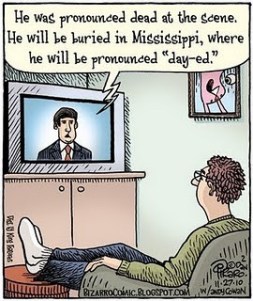
BizarroDay-edDo your characters have their own voice or do they sound the same? I had a critique partner tell me that she couldn’t distinguish characters in my manuscript based on dialogue. They all sounded the same. If I hadn’t provided a dialogue tag, she would have had no idea which character was speaking. She was right.

This was something I definitely had to correct. So I did some research, watched a webinar, and took a class on dialogue. Distinguishing between characters is a lot easier than you would think.

One way to differentiate characters and determine who they are is through dialect.  We can learn a lot about a person based on their accent, grammar, and choice of words.

You don’t have to ask a person if they are from the North or South-just listen to how they speak and note their word choices.  While this is one of the most obvious examples for me, you…

View original post 258 more words

How to Create Effective Character Names

Jed Herne's avatarJed Herne: Writer

Names are an important part of all good characters. Names can be brave, funny, or menacing, and are an essential part of character creation. Personally, I always need a name for my characters before I can flesh them out, and that’s why today’s post will provide guidelines for crafting memorable, powerful and effective character names.

Consider Character Traits:

Is your character a tad meek, and maybe a little hopeless? If so, name them Neville Longbottom!

Is your character a tough, competant, I’ll-do-it-alone kinda guy? If so, call them Han Solo!

A character’s name is a reader’s first experience of that character. Thus, it makes sense to use names to reflect a character’s personality.

View original post 395 more words

Using Body Language in Your Novel, Part Two—Eyes, Pupils, & Eyebrows

The eyes have it! 😉

S. Katherine Anthony's avatarWriters After Dark

Body language part two the eyesThey say that our eyes are the “windows to the soul.” Isn’t that sweet? Yes, yes it is. Which is why this would be a fantastic place to practice some poetry, but instead, how about we exploit this little tidbit to benefit our writerly lives? Let’s explore the eyes—in the art of using body language in fiction.

It’s undeniable that our eyes are very special, but what exactly do we see when we stare into someone’s eyes? Information about their emotional state, that’s what. Can you imagine what damage this type of knowledge can do in the wrong hands? Oh boy!

For the villains, they can manipulate, hurt, and deceive. For the heroes, they can help, console, or protect. OR vice versa! Hey, it’s not mutually exclusive, and that’s the beauty. As the reader, you can get an insight on the emotional turmoil they’re all going through. And as the…

View original post 1,345 more words