“Loving v. Virginia”


Interracial marriage in the United Sates was banned in 1664 and not overturned until 1967.

During the seventeenth and early eighteenth century, the growing number of interracial marriages (also known as miscegenation) between Blacks and whites led to the passage of this new law. The first anti-miscegenation law enacted was in the colony of Maryland in 1664 and additional colonies quickly followed suit. These marriages were prohibited and penalties included the enslavement, exile or imprisonment of the white perpetrators. These laws grew and evolved over the years and attempts were even made to modify the Constitution to ban interracial marriage in all states.

It would take three hundred years for this law to be overturned. In 1967, Richard Loving, a white man, and Mildred Jeter, a Black woman, were married in the District of Columbia. When they returned home to Virginia, they were arrested and convicted of violating the state’s anti-miscegenation law. They each faced a year in jail and their case went to the Supreme Court. The Supreme Court found in favor of the Lovings in the famous trial Loving v. Virginia.They ruled that prohibiting interracial marriage on state and local levels was unconstitutional; this meant that marriages between the races were legal in the country for the first time since 1664.

In 2000, Alabama became the last state to officially legalize interracial marriage by removing the unenforceable ban that was still contained in their state constitution. Read more famous cases about interracial relationships that changed history.

Image © Bettmann/CORBIS

From pbs.org

Dabbling in Drabbles


Drabbles


Just for Now – Drabble #3

With a heavy heart, Des drove home from work, unhurried.

He wouldn’t be there tonight… or ever again.

He’d stroked her cheek and said, “I’ll always love you,” followed by, “but, I’m not happy.”

He wasn’t the first to say the words, just the latest.

And the one she’d hoped would stay.

Why did they always leave?

She was the temporary girlfriend never good enough for long-term.

Parking her car, she rushed up the walkway ignoring the pitying looks of her neighbors.

Letting herself in, she closed the door and sagged against it.

They already knew.

She was alone again.

broken heart


Image from Pixabay
©2018 Felicia Denise, All Rights Reserved

New Hire #WIP


Glasses of Wine

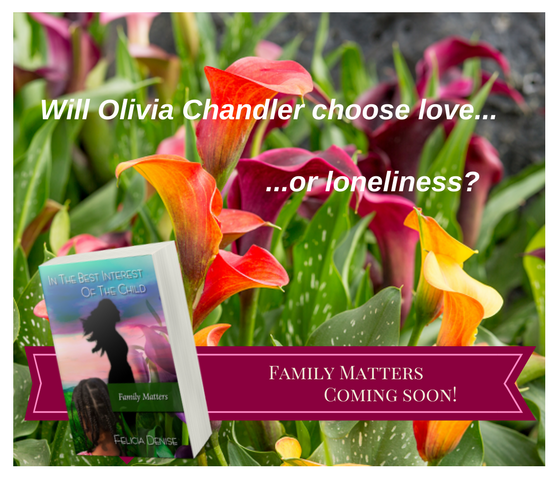
An excerpt from current WIP, “Family Matters (In the Best Interest of the Child Book 2).” Even while attempting to organize her life and move forward, Olivia Chandler manages to help someone else.

Olivia Chandler was exhausted.

She had too many open cases for one attorney with little backup. The Chandler Group attorneys were all carrying multiple cases. Olivia was grateful business was good because it meant children weren’t being shut out of the conversation on their care. But it also meant families were splintered and bickering… and sometimes it had nothing to do with the minor child involved.

She needed help.

Olivia had witnessed Glendon Kane in the courtroom firsthand and found him to be an adept litigator and brilliant legal strategist.

And too good for Borst & Peckham.

On impulse… and one hundred percent out of character, Olivia called Glendon and invited him to an early dinner to discuss a business matter.

“Thank you for accepting my dinner invitation, Glendon.”

She could see the fatigue lining a brow far too young for such things.

He gave Olivia a genuine smile.

“As if I’d say no to you, Olivia. Beautiful women don’t ask me out every day.”

“Oh, Mr. Kane. That is not the story I heard.”

The attorneys shared a laughed. Glendon raised his hands in defeat.

“Okay, Okay, Women do ask me out. But I never saw myself sharing a meal with the great Olivia Chandler.”

She smirked and waved him off.

“Don’t even try it. My office manager doesn’t miss much of the courthouse grapevine. I think she may even be responsible for half the info making the rounds, and she says you’re pretty popular with the ladies.”

“Ah, the magnificent Margot.”

“She’ll love that you called her magnificent.”

“She is. But tell her most of my dates never get further that one or two dates. And a third date is unheard of.”

Olivia sobered, not wanting to ask why but curiosity… and empathy showed in her eyes.

Glendon laughed and shook his head.

“Fortunately, it’s not what you think, Olivia. The problem is women find out I work for B&P and they see dollar signs. But when they find out I’m a low-paid associate, their interest fizzles.” He pointed to his face. “Not even these amazing good looks can keep them around.”

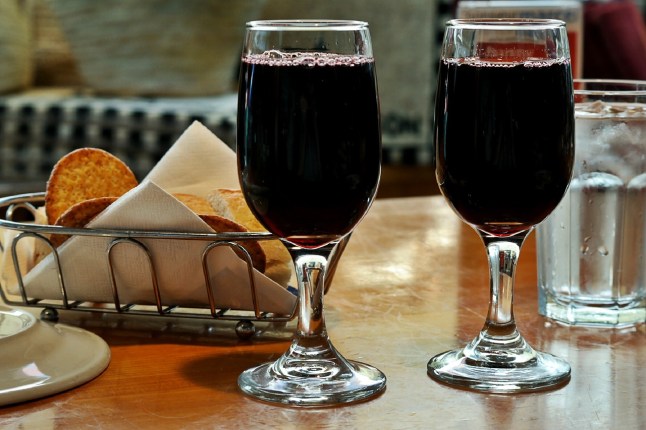
Olivia slid her wine glass aside and folded her hands on the table.

“I heard about the Getner lawsuit… and the blame being laid at your feet, Glendon.”

His smile caught Olivia off guard. She frowned.

“Yeah, the last couple of days weren’t the best. This was not a difficult case, but dumb and mega-dumb kept sticking their noses in where they didn’t belong. Paulina Getner did file a lawsuit. And I can’t say that I blame her, but she and I talked… again, and I’ve negotiated a good settlement. Now all I have to do is get Tanner Peckham to issue a public apology.”

“His father will be livid.”

“He should have kept his baby boy on a short leash and out of my case.”

Olivia shook her head in disbelief.

“Why do you do it, Kane? You’ve more than put in your time. Why do you stay? Your record is exemplary. Any firm would be lucky to get you.”

“B&P have just enough money to keep me invisible in this state. The larger firms are owned by their friends and the smaller firms are bullied into ignoring me. My meager savings are not enough to start my own practice… so I remain the whipping boy.”

“There are forty-nine other states.”

“But my dad is here. It’s been just he and I for the last twelve years. He’ll never leave the home he shared with my mom… and I’ll never leave him.”

He sipped his wine.

“So, B&P’s money keeps me locked in even though they only toss pennies my way.”

Unable to keep the smug look from her face, Olivia Chandler leaned back, her head tilted to the side.

“Maynard and Samuel’s millions… and their connections don’t scare me.”

Glendon Kane’s face brightened.

“Olivia? Are you offering me a job?”

“Yes.”

Incredulous, Kane scrubbed his hand down his face. Returning his gaze to Olivia, he searched for the words.

“The Chandler Group… wow. Your reputation is flawless and you guys do some awesome work.”

Glendon abruptly held his hands up.

“You realize Maynard and Samuel won’t just let me walk away?”

“Are you in the middle of a contract with them?”

“No. My last contract ended over five months ago. They’ve been slow to write up another because they don’t want to make me a partner… or increase my pay. I’m still working under the terms of the contract we signed two years ago.”

Olivia leaned forward.

“You let me worry about those two. I need help, Glendon. I love my job, but my current caseload is out of control.  I don’t have the time to train or hold anyone’s hand. You’re amazing in the courtroom… a force to be reckoned with. Your concern for your clients is genuine and you’ve won some near-impossible cases because you weren’t afraid to buck the system. I’m sure your billable hours are more than those four doorstops combined.”

Her face softened.

“Come to work for me… after the appropriate notice to Borst, of course. I’ll have something drawn up in the morning, but it will include a significant pay increase, an expense account, full medical… and no weekends.”

“Olivia, you had me at “Come to work for me.””

Olivia Chandler laughed. “Seriously though, Glendon. Email or call Margot in the morning with your particulars. We can meet for a late lunch or another early dinner to go over the contract. You can give Borst notice by the end of the week.”

Kane reached out and grabbed Olivia’s hand, firmly shaking it.

“At this point, Olivia, the wording of a contract is not an issue. You’re respected and held in high regard in the state’s family law system and internationally in the public interest community. I appreciate the opportunity… and honestly, I think you’re saving my life.”

She gripped his hand, returning his handshake.

“Glendon, we’re saving each other and I look forward to working with you. Now, let’s order a couple of those thirty-two-ounce Big Texan steaks and see how much we can eat before we get sick.”

“You’re on!”

The attorneys chatted and joked amiably. Olivia relaxed, proud of herself for following her first thought and offering the harried Glendon Kane a position.

Maynard Borst and Samuel Peckham would be furious. They would be full of piss and vinegar and issue empty threats, but Glendon would come to work for her… that she was sure of.

Her workload would lighten and she would have free time. Something she’d never wanted before, but there was no Bruce Bellamy before. Olivia looked forward to spending more time with Bruce and his huge, loving family. She felt like she was a part of something important and she liked it.

Glendon was laughing and telling a story from his law school days as Olivia said a silent prayer for her future with Bruce… and that she didn’t do anything to ruin it.

©2017 Felicia Denise, All Rights Reserved

Save

The Diverse History of HBCUs


Melrose


The diverse history of Historically Black Colleges and Universities.

While Jewish and African American communities have a tumultuous shared history when it comes to the pursuit of civil rights, there is a chapter that is often overlooked. In the 1930s when Jewish academics from Germany and Austria were dismissed from their teaching positions, many came to the United States looking for jobs. Due to the Depression, xenophobia and rising anti-Semitism, many found it difficult to find work, but more than 50 found positions at HBCUs in the segregated South.

Originally established to educate freed slaves to read and write, the first of the Historically Black Colleges and Universities was Cheyney University in Pennsylvania, established in 1837. By the time Jewish professors arrived, the number of HBCUs had grown to 78. At a time when both Jews and African Americans were persecuted, Jewish professors in the Black colleges found the environment comfortable and accepting, often creating special programs to provide opportunities to engage Blacks and whites in meaningful conversation, often for the first time.

In the years that followed, the interests of Jewish and African American communities increasingly diverged, but this once-shared experience of discrimination and interracial cooperation remains a key part of the Civil Rights Movement.

Image: Melrose Cottage, built in 1805, Cheyney University of Pennsylvania.

From pbs.org

After Work

Elevator photo

A scene from Heartburn which I am absolutely clueless about! 😀


Making her way to the elevator just after 6:30, Quinn was glad to see the end of the day. She spent the afternoon wheeling and dealing like a Wall Street broker securing new health plans to replace Martech after their premium rate hike. Quinn was successful so far, but at the expense of a migraine trying to form behind her eyes.

Pushing the down button, Quinn leaned her head against the cool, marble wall while she waited for the elevator.

“That kind of day, huh?

Quinn turned to find Fletcher Morgan… standing unusually close to her. She hadn’t even heard him approach.

“Unfortunately, yes. But it’s over… for now. It’s safe to make my escape.”

Fletcher nodded, knowingly. “Funny how a forty-hour work week so easily turns into sixty… or more. It seems like we’re always here. I’m sure your husband will be happy to see you walk through the door.”

Quinn quickly looked away and was saved from responding when the elevator doors opened.

Frowning, Fletcher followed her into the car. “Where are you parked?”

“Um… garage level four. Thanks.”

“I’m on four, too.” Pushing the button, Fletcher leaned against the lift wall. “Quinn, did I say something wrong?”

She stared at the descending floor numbers.

“Quinn?”

Smiling faintly with a half shrug, Quinn looked into Fletcher’s eyes for the first time. “I’m going through a divorce, Fletcher.”

The young man froze… momentarily speechless.

“Quinn, I-I… dammit! I feel like such an idiot! I had no idea. Please forgive me for speaking out of turn.”

“It’s okay, Fletcher. You didn’t know. Although, I’m pretty sure you’re probably one of the last few in the building who didn’t know.” She laughed easily.

Fletcher watched her… confused.

“Well… um, you seem to be dealing with it pretty well.”

“It didn’t just happen. It’s been a few months, and honestly — I waited far too long.” Before Fletcher could respond, the elevator doors opened. Quinn quickly exited the lift, heading for her car, pausing long enough for a quick goodbye. “Have a good eve-…”

“How are you really doing, Quinn? I know it’s stressful. My divorce two years ago had me drinking way too much.”

“That bad, huh?”

He nodded.

“It has been stressful. He keeps finding ways to stall, and while he’s stalling, he, along with our families gang up on me trying to make me change my mind.”

“He’s still in love with you?”

“Oscar is in love with Oscar… and the thought of marriage.”

“If he’s going through so much trouble to stall, maybe he’s learned his lesson and reconciliation is possible.”

Quinn smirked.

“It might be a possibility for him, but not for me. He should have thought about that before he cheated… several times.” She saw a flash of anger in his eyes, but it quickly disappeared.

“Are you kidding me? The man was married to you”, he pointed at her, “and he cheated? Is he a sighted man?”

The laugh escaped her lips before she could stop it.

“Seriously, Quinn Landon. You’re a beautiful woman. I don’t know you well personally, but I hear nothing but good things about you around the company. Forgive me for being so forward, but I think your husband — soon-to-be-ex-husband — is an idiot.”

Ducking her head as heat flooded her face, Quinn was grateful her mocha skin hid her blush.

“Thank you, Fletcher. That’s so kind of you to say.”

“You’re welcome. May I ask if you have a good attorney? Your assets being protected?”

“He’s a great attorney, and I’m not giving up a thing. What’s mine stays mine.”

“Good. My ex-wife came into the marriage with nothing, attempted to spend half of what I had while we were married, and tried to take the rest with her after I filed for divorce. This is a community property state, but no need to get carried away.”

“Exactly!”

He reached out and touched her arm. “It will get better, you know?”

Quinn nodded.

“I know. I’m just ready for the storm to pass. I need some sunshine in my life.”

Fletcher nodded in agreement, the firm set of his jaw instantly making Quinn think of John Wick. Damn that Priscilla! She bit the inside of her jaw to keep from smiling.

©2017 Felicia Denise, Al Rights Reserved

Save

MLK and the “I Have a Dream” Speech


Martin Luther King Jr. improvised the most iconic part of his “I Have a Dream Speech.”

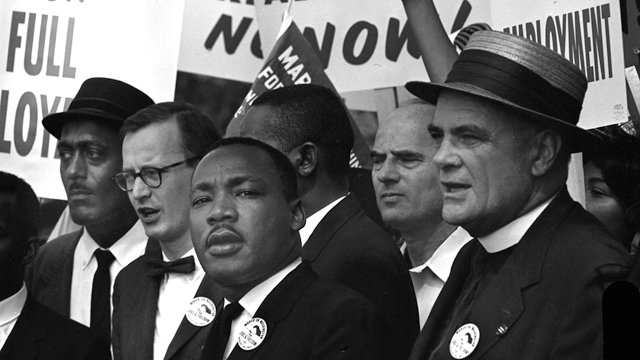
On Wednesday, August 28, 1963, 250,000 Americans united at the Lincoln Memorial for the final speech of the March on Washington. As Martin Luther King Jr. stood at the podium, he eventually pushed his notes aside.

The night before the march, Dr. King began working on his speech with a small group of advisers in the lobby of the Willard Hotel. The original speech was more political and less historic, according to Clarence B. Jones, and it did not include any reference to dreams. After delivering the now famous line, “we are not satisfied, and we will not be satisfied until justice rolls down like waters and righteousness like a mighty stream,” Dr. King transformed his speech into a sermon.

Onstage near Dr. King, singer Mahalia Jackson reportedly kept saying, “Tell ‘em about the dream, Martin,” and while no one will know if he heard her, it could likely have been the inspiration he needed. Dr. King then continued, “Even though we face the difficulties of today and tomorrow, I still have a dream. It is a dream deeply rooted in the American dream….” And then the famous Baptist preacher preached on, adding repetition and outlining the specifics of his dream. And while this improvised speech given on that hot August day in 1963 was not considered a universal success immediately, it is now recognized as one of the greatest speeches in American history. For more information on the 1963 March on Washington, visit pbs.org/marchonwashington.

Image: National Archives and Records Administration